
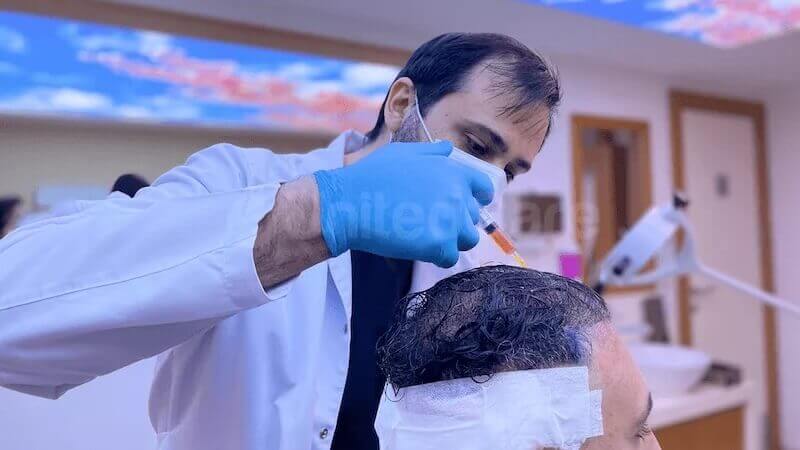
Everyone who had or is planning to have a hair transplant hears about PRP.
In this article, I’ll clearly explain why PRP hair transplant is so crucial, supported by scientific data.
Bear with me.
How effective is PRP in FUE hair transplant?
In the following 2025 study[1] analyzing the effect of PRP in FUE hair transplant on patients taking drug therapy:
Each patient in the PRP group took 3 PRP injections:
💉 Before FUE follicle extraction, 1st mont post-op, 2nd month post-op.
The result shows that thanks to the PRP injections after FUE hair transplant:
- Hair graft survival rate is 13% higher after 3 months post PRP hair transplant
- Hair graft survival rate is 11% higher after 6 months post PRP hair transplant
- Initial hair growth is 2.3 days earlier
PRP group | PRP Group | Control Group |
|---|---|---|
| Avg. No. of transplanted follicle units | 1001 | 1087 |
| Survival Rate 3 Months postoperative | 88.4% | 78.2% |
| Survival Rate 6 Months postoperative | 82% | 74% |
| Initial Growth duration | 17.7 Days | 20 Days |
Conclusion
This research clearly shows that PRP hair transplant with minoxidil and finasteride/spironolactone drug therapy is really effective in boosting graft survival rates, making it an important and affordable addition to FUE hair restoration procedures.
How effective is PRP in DHI hair transplant?
In 2026 study[2] PRP application in DHI hair transplant is analyzed with a randomized controlled trial.
The primary objective of the study was to see the effects of PRP on hair length and density post-op.
This time, platelet-rich plasma (PRP) is injected during the DHI hair transplant surgery.
Results show that:
- After 4 weeks, # of grafts from 4 cm from the midline is 9.8% higher in PRP hair transplant
- After 16 weeks, # of grafts from 4 cm from the midline is 18% higher in PRP hair transplant
| Follow-up Period | Group | DHI + PRP (Mean ± SD) | DHI (Mean ± SD) |
|---|---|---|---|
| 2 cm from midline number of grafts | Week 4 | 29.14 | 28.71 |
| Week 16 | 29.00 | 26.29 | |
| 4 cm from midline number of grafts | Week 4 | 30.14 | 27.43 |
| Week 16 | 29.86 | 25.29 |
Conclusion
18% more grafts are really important with the help of PRP in DHI hair transplant
Imagine you have 2-3 hair transplants with 7000 grafts in total in your lifetime. You’ll have 1260 more grafts on your scalp, almost 4-8% more coverage.
Undoubtedly, PRP with the DHI hair transplant is pretty effective.
Do I recommend PRP as a hair transplant surgeon?
Of course.
Not 1, but many PRP should be done; before the surgery, after the surgery, and sometimes afterwards with intervals.
A proper dermato-surgeon could analyze your skin and determine the intervals.
Also, PRP should be added to organ preservation solutions in addition to Bio-enhancements during the surgery. It will significantly affect the survival rate of grafts since grafts are fragile when they are out of the body before implantation.
Unfortunately, many clinics overlook such details, especially in Istanbul, Turkiye.
I personally perform PRP hair transplant surgery in my clinic and accept only 1 patient a day.
And, I treat every graft as if it were my own.
If you are interested, feel free to say hi to 👉
FUE PRP Hair Transplant Case #1:
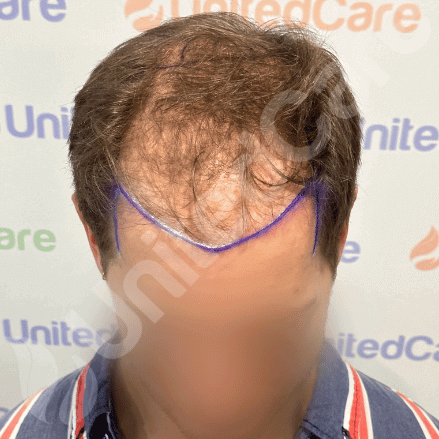
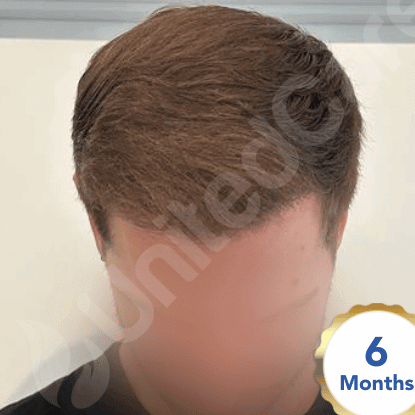
FUE PRP Hair Transplant Case #2:
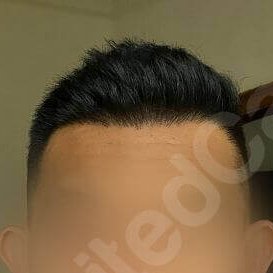
❝ Despite the high level of care, pricing was comparable to the larger clinics I had considered, yet the value I received was on an entirely different level. ❞
-FUE PRP Hair Transplant Patient

References
- 1.Xue, P., Guo, L., Dang, E., Dou, W., Zeng, X., Fan, X. and Yang, Q. (2025), A Prospective and Comparative Study to Explore the Effects of Platelet-Rich Plasma in Hair Transplantation for Patients With Androgenetic Alopecia. J Cosmet Dermatol, 24: e16665. https://doi.org/10.1111/jocd.16665
- Azkha Erdhianto, Agung Wiwiek Indrayani, and Indira Vidiari Juhanna. 2026. “Effect of Platelet-Rich Plasma on Hair Growth and Graft Survival Following Direct Hair Implantation in Androgenetic Alopecia Patients”. Journal of Advances in Medicine and Medical Research 38 (1):1–15. https://doi.org/10.9734/jammr/2026/v38i16036