
You’re having hair loss issues and you’re ready to take action to reverse it since you love your hair.
However, you’re not sure what to do.
Hair Transplant is a real surgery. It has healing period and costs money, even if it is much cheaper in Turkey.
Finasteride, you heard about side effects and its effectiveness is question mark for you. Also, you need to consistently use it for a long term.
It is hard to decide, I understand. If you had previous experience in this topic, it would be easier easy to decide.
Based on my personal experience as a hair transplant surgeon, I’ll show you hair transplant vs finasteride facts in this article.
Bear with me.
Table of Contents
1. Hair Transplant without Finasteride
In one study (Kishen, 2025[1]) comparing hair transplant vs hair transplant + finasteride combo, it is found that
using finasteride after hair transplant improves results with very small side effects.
The study[1] data is as follows:
| Parameter | Finasteride (n=30) | No Medication (n=30) |
|---|---|---|
| Graft Survival (%) | 94 | 90 |
| Hair Density Gain (hairs/cm²) | 28.6 | 24 |
| Global Photographic Score | Higher | Lower |
| Patient Satisfaction | Higher | Lower |
| Side Effects | 2 patients (6.7%) transient low libido | None reported |
As you see, even without finasteride, a very good result can be achieved just by hair transplant.
You move hair from the back of the head to bald areas. These hairs are more resistant to DHT, so they usually survive for a long term.
However, hair transplant doesn’t solve everything.
Yes, transplanted hair stays. But your existing natural hair around it may continue to fall. This is why many people look good after surgery, then after few 4-5 years they need another transplant.
With 2 or 3 hair transplant, desired look can be achieved for really long term.
2. Hair Transplant with Finasteride
In the previous study result, we saw that the difference between hair transplant with or without finasteride is very low (4%).
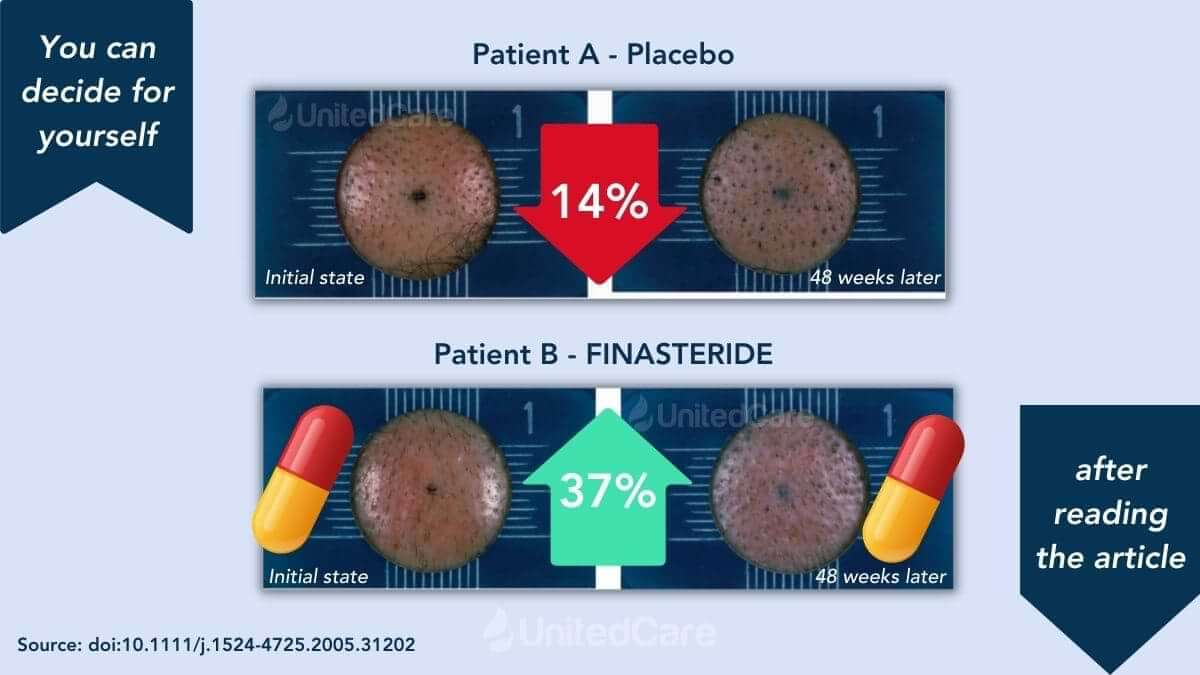
In another much older study (Leavitt M, 2005[2]), results are as follows:
- 79 men with hair loss (20–45 years old) had hair transplant.
- 40 men took finasteride 1 mg daily, 39 men took placebo.
- Medication started 4 weeks before surgery and continued 48 weeks after.
- Visible improvement in superior/frontal scalp: 94% (finasteride) vs 67% (placebo).
- Finasteride was generally well tolerated, no serious side effects.
| Parameter | Finasteride (n=40) | Placebo (n=39) |
|---|---|---|
| Hair Improvement (global photos & counts) | Significant | Less |
| Visible Superior/Frontal Hair | 94% | 67% |
| Side Effects | Minimal | Minimal |
Finasteride 1 mg daily before and after hair transplant improves hair around transplant and increases density with very small side effects.
This makes sense. Transplanted hair is resistant, but finasteride protects your original hair, so everything looks fuller and more natural for longer time.
That’s why many experienced doctors including me say:
Finasteride → Hair Transplant → Continue Finasteride
However, place group’s very low improvement rate seemed suspicious to me. Maybe in 2005, there weren’t quite advanced techniques so that grafts were becoming more fragile, I don’t know.
3. Finasteride without Hair Transplant
In another, very famous and long term study (Yanagisawa, 2019[3]), results are as follows:
- 532 Japanese men with hair loss used finasteride 1 mg daily for 10 years.
- After 10 years:
- 99.1% stopped hair loss progression.
- 91.5% had improvement.
- Side effects were mild and rare:
- Decreased libido: 5.6% (30/532)
- Erectile dysfunction: 3.0% (16/532)
- No serious side effects, all patients continued treatment.
- Improvement increased steadily from year 1 to year 10.
| Parameter | Result (n=532) |
|---|---|
| Stopped hair loss progression (MGPA ≥4) | 99.1% |
| Hair improvement (MGPA ≥5) | 91.5% |
| Mild side effects | 6.8% |
| Decreased libido | 5.6% |
| Erectile dysfunction | 3.0% |
| Serious side effects | 0 |
Finasteride 1 mg daily for 10 years in Japanese men stopped hair loss in almost all patients and improved hair in over 90%, with very small side effects.
And the last study (Kaufman, 1998[4]) I’ll analyze in this article with results are as follows:
- 1553 men with male pattern hair loss (18–41 years old) took finasteride 1 mg daily or placebo for 1 year, 1215 continued for 2nd year.
- Hair was measured by scalp hair counts, photos, and patient/investigator assessments.
- Finasteride improved hair at 1 and 2 years, placebo group kept losing hair.
- Clinically significant hair count increase:
- Year 1: +107 hairs
- Year 2: +138 hairs
- Patients felt their hair looked better and hair loss slowed.
- Side effects were minimal.
| Parameter | Finasteride (1 mg/d) | Placebo |
|---|---|---|
| Hair Count Increase (1 year) | +107 hairs | Progressive loss |
| Hair Count Increase (2 years) | +138 hairs | Progressive loss |
| Patient Assessment | Slowed loss, better appearance | Progressive loss |
| Investigator/Photo Assessment | Improvement | Progressive loss |
| Side Effects | Minimal | Minimal |
Finasteride 1 mg daily for 1–2 years slowed hair loss and increased hair growth with very few side effects in this study.
So, some people choose finasteride alone, without any surgery. Usually this is younger patients or people who still have enough hair and just want to stop the loss.
So finasteride alone can work very well if your body tolerates it and if you start early. But it requires long-term use and patience.
My Recommendation as a Surgeon
There is no single answer for everyone.
If you start finasteride early and tolerate it well, you might never need a hair transplant.
If you do hair transplant without finasteride, you should know that hair loss may continue and you may need 2 or even 3rd hair transplant to get the desired look for the long term.
In my opinion, if you want the best long-term result combining hair transplant with finasteride gives better density, better survival, and higher satisfaction.
At the end, it’s your body and your choice. I hope this article makes your decision easier.
If you want me to see your case, feel free to reach to me for a free consultation.
Let’s restore your with or without finasteride
Feel free to reach for a free consultation
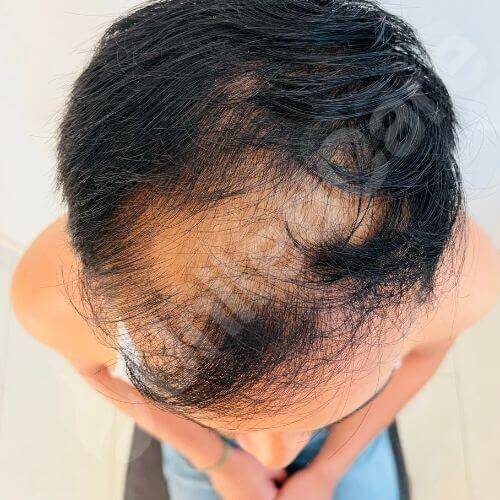
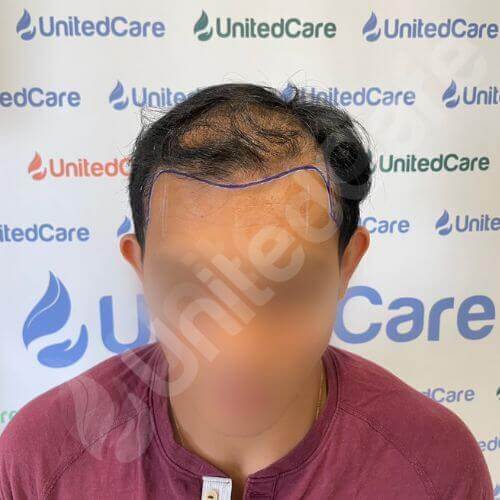
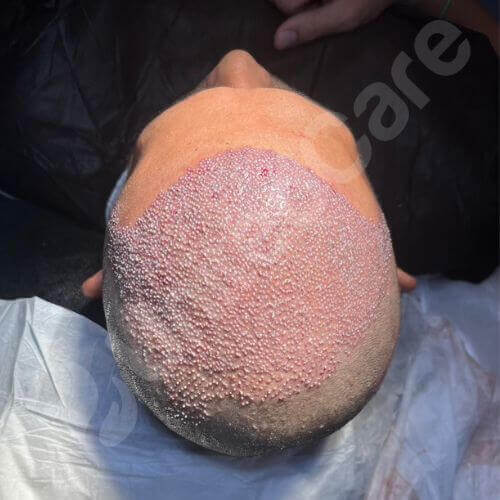
6 months FUE Hair Transplant before after, no finasteride:


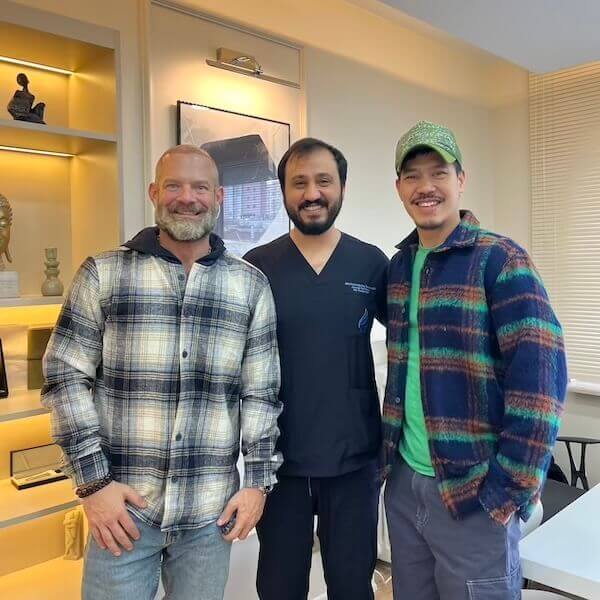
❝ I had a hair transplant done by him at the clinic, and the whole process was outstanding. Everyone is very friendly and they make you feel comfortable from the very beginning. The intervention went perfectly, everyone was professional, Dr Utkan was involved in all the important parts of the operation. ❞
⭐️⭐️⭐️⭐️⭐️ | RealSelf

References
- Kishen, A., John, R. S., Krishnan, M., & Kumar, S. (2025). Post Operative Finasteride Following Hair Transplant Compared with no Medication: A Prospective Comparative Study. Journal of Chemical Health Risks, 15(5), 930–933.
- Leavitt M, Perez-Meza D, Rao NA, Barusco M, Kaufman KD, Ziering C. Effects of finasteride (1 mg) on hair transplant. Dermatol Surg. 2005 Oct;31(10):1268-76, discussion 1276. doi: 10.1111/j.1524-4725.2005.31202. PMID: 16188178.
- Yanagisawa, Masayuki & Fujimaki, Hiroshi & Takeda, Akira & Nemoto, Mitsuru & Sugimoto, Takayuki. (2019). Long-term (10-year) efficacy of finasteride in 523 Japanese men with androgenetic alopecia. Clinical Research and Trials. 5. 10.15761/CRT.1000273.
- Kaufman KD, Olsen EA, Whiting D, Savin R, DeVillez R, Bergfeld W, Price VH, Van Neste D, Roberts JL, Hordinsky M, Shapiro J, Binkowitz B, Gormley GJ. Finasteride in the treatment of men with androgenetic alopecia. Finasteride Male Pattern Hair Loss Study Group. J Am Acad Dermatol. 1998 Oct;39(4 Pt 1):578-89. doi: 10.1016/s0190-9622(98)70007-6. PMID: 9777765.